

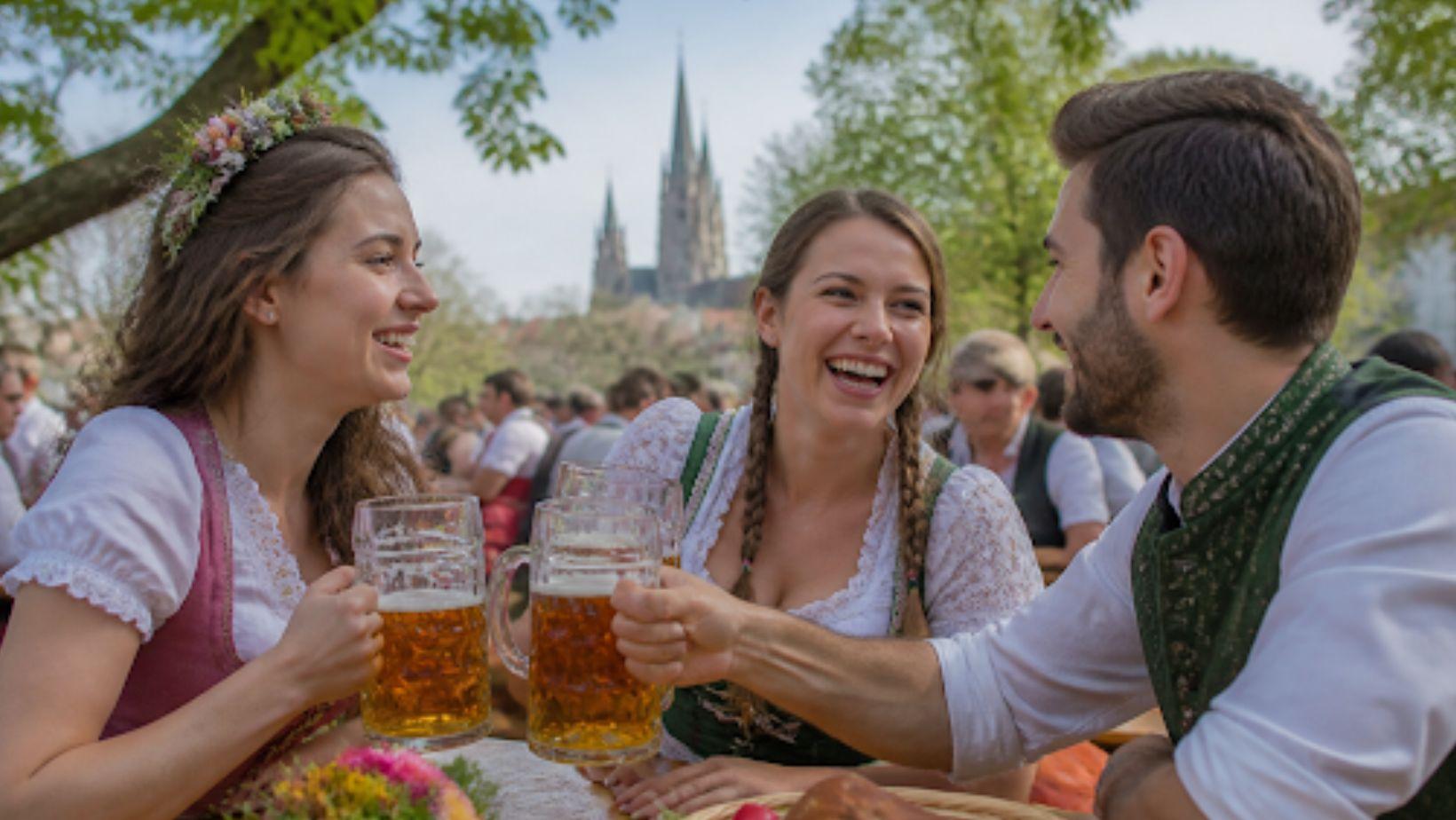
Munich Beyond Oktoberfest: Why Springfest Is the Insider's Beer Festival You Need to Experience
Most people planning a trip around Munich beer festivals have one event in mind: Oktoberfest. It is the world-famous one, the bucket-list one, the one on all the posters. But Munich keeps a quieter secret in spring, and locals tend to prefer it. Frühlingsfest, or Springfest, runs on the same famous fairground, serves the same litre steins, and has the same festival-band energy, only with a fraction of the tourist pressure and considerably more room to breathe.
If you have done Oktoberfest and found it overwhelming, or if you have never been and want a gentler first experience, Springfest is worth a serious look. This article compares the two festivals side by side, helps you decide whether Springfest suits your travel style, and walks you through the key planning steps. Where the details get granular, such as exact dates, tent contacts and reservation forms, a dedicated resource like the Thirsty Swagman Springfest guide will take you the rest of the way.
Springfest vs Oktoberfest: timing, size and who each festival suits
The most obvious difference is timing. Oktoberfest runs from late September into early October, while Springfest typically spans two long weekends from late April into early May. Both take place at the Theresienwiese, Munich's central festival ground, so the setting is familiar: the same large permanent tents, the same fairground rides, the same broad promenades.
Scale is where the two diverge sharply. Oktoberfest draws millions of visitors from every corner of the world, runs more tents, and generates a level of crowd pressure that can feel relentless at peak times. Springfest is noticeably smaller: fewer tents, no coach-tour groups in matching T-shirts, and a crowd made up largely of Munich residents and Bavarians meeting friends after work or spending a weekend out. You will hear far more German spoken around you.
The two festivals map onto quite different travel styles. Oktoberfest is the right choice if you want maximum spectacle and are happy to plan carefully, queue extensively, and pay the premium prices that come with global demand. Springfest suits travellers who value spontaneity, easier access to seats, and a festival day that feels sociable rather than logistically exhausting. The rowdy binge-drinking reputation that clings to peak Oktoberfest is largely absent; the crowd leans more towards families, after-work groups and people who are there for the atmosphere rather than the occasion.
Inside the tents: atmosphere, crowds and how Springfest actually feels
Step inside a Springfest tent and the fundamentals are exactly what you would hope for: a festival band belting out oompah and pop covers, hundreds of people standing on the benches singing along, litre steins arriving at pace, and hearty Bavarian food filling the long shared tables. The difference from Oktoberfest is felt in the margins, and the margins matter a great deal.
Aisles are passable. At peak Oktoberfest, moving from one end of a tent to the other takes real effort; at Springfest, you can wander without fighting your way through. Securing a seat is significantly more achievable, particularly on weekdays and in the early evening, and smaller groups arriving by mid-afternoon on weekends can often walk into the larger tents without a reservation, something that is essentially impossible at Oktoberfest without planning weeks in advance.
The social atmosphere benefits directly from the lower density. Shared tables at German beer festivals are designed for exactly that, and when the tent is not packed to the rafters, conversations start more naturally. There is less of the subtle pressure to drink fast just to hold your place, which means a Springfest evening can feel genuinely fun rather than a test of stamina. Beyond the tents, the fairground rides and food stalls are the same draw they always are, but queues are shorter and it is easy to drift between the beer garden outside, a ride and back into the tent without losing the thread of the evening.
Planning the basics: when to go, how long to stay and what it might cost
Springfest usually runs for around two weeks, anchored by two long weekends in late April and early May. The exact dates shift slightly from year to year, so confirm the current year's schedule before booking anything.
The location is as central as Munich gets. Theresienwiese sits a short walk or one U-Bahn stop from the central station and the old town, so getting there from almost any accommodation in the city centre takes under fifteen minutes.
For trip length, two full days in Munich gives you a solid festival experience alongside time to actually see the city. A good pattern is one evening session in the tents, arriving around 6pm and staying as long as you like, followed by a more relaxed afternoon visit the next day, when beer gardens open in the sun and the fairground has a gentler pace. Extend to three or four days and you have room for the museums, the Englischer Garten, and a day trip to Neuschwanstein or Salzburg.
On budget: beer and food prices at Springfest are broadly comparable to Oktoberfest on a per-item basis, so a litre of beer and a half-chicken will not be cheap by any standard. The real saving is in everything around it. Spring flights to Munich from most European cities are considerably cheaper than during Oktoberfest, hotel rates are lower, and the absence of extreme demand means you are not locked into booking months ahead or paying surge prices for a central room.

Planning the basics: when to go, how long to stay and what it might cost
Do Springfest like a local: what to wear, when to arrive and tent etiquette
Traditional Bavarian dress is entirely at home at Springfest. Dirndls and lederhosen are common and genuinely welcomed, so if you own them or enjoy wearing them, go ahead. That said, visitors in smart-casual clothes are just as comfortable and will not stand out. The honest advice is to wear what you will actually enjoy wearing rather than buying a costume purely for show.
On reservations: for a group of two to four people, walking in without one is very possible if you time it well. Aim for mid-afternoon on weekends, around 2pm to 3pm, or early evening on weekdays. The best seats tend to go first, but at Springfest there are usually good spots available well into the evening on quieter days. Larger groups, or anyone with a specific tent or a Saturday night in mind, are better off reserving in advance. A good specialist guide will have the current contact details and booking procedures.
Once you are inside, a few courtesies go a long way. Always be ready to share a long bench with strangers, because that is the whole point. Order from the waiter assigned to your section rather than flagging down whoever happens to pass, leave a modest tip, and the service tends to stay friendly throughout. Standing on the benches is fine and expected once the singing gets going; standing on the tables is not. Bring cash for tips and smaller stalls, and learning a few words of German, 'Prost' for the toast and 'Entschuldigung' to get someone's attention politely, is a small gesture that locals notice and appreciate.
Fitting Springfest into a wider Munich itinerary: accommodation, weather and logistics
Accommodation during Springfest is a very different proposition to Oktoberfest. Munich in late April is a popular destination, and weekends near public holidays book up earlier than midweek stays, but you are not facing the months-in-advance scramble that Oktoberfest demands. Prices are noticeably softer, central options remain available closer to your travel dates, and while booking early still gives you the best choice, a last-minute spring trip is at least possible.
Weather is worth thinking about honestly. Late April and early May in Munich can be lovely, with warm afternoons, long light and beer gardens at their most inviting, but evenings can turn cool and a shower is always possible. Pack a light layer and be ready to adapt. The upside is that the tents become genuinely cosy when the air outside cools, and a warm afternoon in the beer garden with the Alps visible on the horizon is one of the better ways to spend a day in Bavaria.
Springfest also sits naturally within a broader European spring itinerary. The festival's timing fits well alongside a city break, a walking trip through the Alps, or a loop that takes in Salzburg, Innsbruck or Vienna while the mountains are still snow-capped. The flexibility it allows, fewer days needed and no requirement to book everything months out, makes it far easier to thread into a wider trip than the fixed, high-pressure Oktoberfest window.
Ready to plan? A quick self-check and where to go next
Springfest is likely a good fit if the idea of a big tent with live music and cold beer appeals but heavy crowds do not, if you prefer being around locals rather than tour groups, and if you want a festival that still leaves energy and time for everything else Munich has to offer. It is not a compromise on atmosphere; it is a different flavour of the same thing, and many people who have been to both will tell you they prefer it.
The practical steps are straightforward: pin down your dates within the Springfest window, book accommodation centrally with enough lead time to have good options, and sketch out one or two festival sessions, perhaps one evening in the tents and one relaxed afternoon. Build the rest of the trip around that structure rather than letting the festival take over every day.
For the logistics that sit beyond the scope of this article, including the current tent line-up, exact opening hours, how to make a reservation and any rule changes for the current year, Springfest Munich is covered in detail elsewhere as the right next step. It is a dedicated resource covering the on-the-ground details that a big-picture planning piece like this one deliberately leaves aside.
The best version of a Springfest trip is one where the festival is a highlight, not the entire itinerary. A tent evening, a lazy afternoon in the beer garden, a morning in one of Munich's neighbourhoods, a day trip somewhere in Bavaria: that combination is what makes the trip feel less like attending an event and more like actually spending time in one of Europe's most enjoyable cities.