

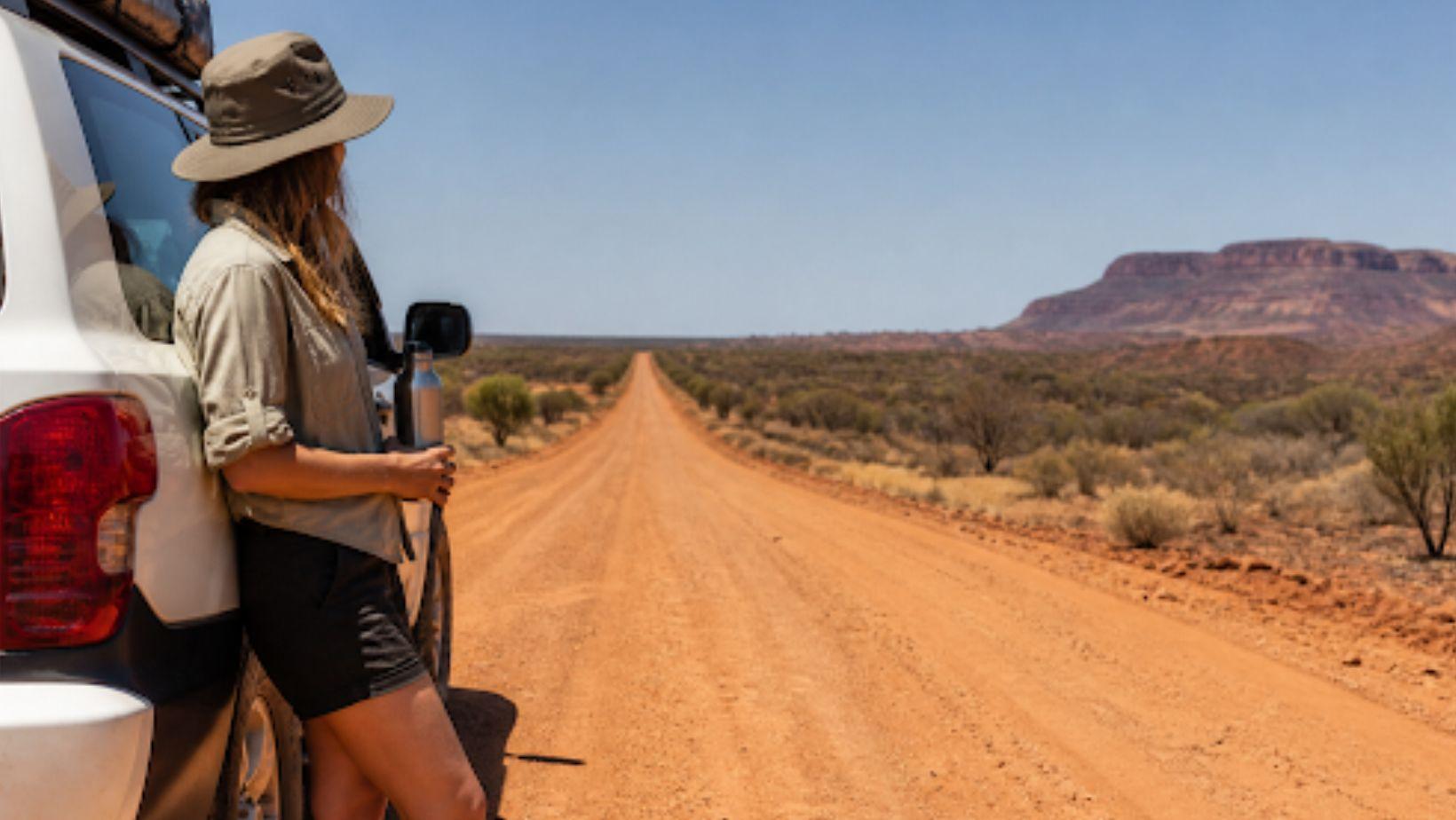
Picture yourself towing a caravan along a dead-straight outback highway, red dirt stretching to the horizon, the nearest town a two-hour drive away. That solitude is exactly what draws people out there, but it also means small mistakes compound quickly. Outback summer road temperatures can top 50°C, services are routinely 200–300 km apart, and a van that loses its cooling or a traveller who runs short on water faces a serious situation with no easy rescue.
This guide focuses on one central question: how do you plan and drive a remote Australian outback road trip in a caravan without getting caught out by extreme heat? It covers season and route choices, daily driving habits, vehicle and air conditioner readiness, and what to do if something goes wrong. The advice is aimed at caravan travellers who already know how to tow; you will find concrete numbers and practical checklists here rather than general road-trip inspiration.
Understanding outback heat and remoteness before you go
The first mindset shift is treating heat, not wildlife or rough roads, as the primary risk. Daytime air temperatures across much of the outback regularly exceed 35–40°C through summer, and many regions push past 45°C at the peak. Bitumen absorbs and radiates additional heat, so the temperature inside a stationary caravan on a still afternoon can climb well beyond what the air thermometer shows.
What makes this particularly demanding for caravan travellers is the rate of change through the day. Mornings can feel almost pleasant, but by mid-morning the temperature is rising sharply, and by early afternoon the heat is genuinely dangerous for anyone doing physical work: hitching up, levelling the van, setting out an awning. These are exactly the tasks caravan travellers do routinely, and they carry far more risk in 43°C heat than in the 25°C conditions most travellers are used to closer to the coast.
The remoteness amplifies everything. Fuel stations and towns are commonly 200–300 km apart, and on some stretches you may go several hours without seeing another vehicle. Mobile reception is patchy or entirely absent across large areas, which means you cannot assume a roadhouse will be open when you arrive, cannot count on a powered site being available for your air conditioner, and cannot call for help on a standard phone if something goes wrong. Self-sufficiency for cooling, water, food and basic repairs is not optional; it is the baseline.
Route and timing choices that keep the heat manageable
Timing is arguably the single most powerful tool in your outback road trip planning. The cooler months, roughly April through to October though this varies by region, are the right window for longer remote caravan trips. The Northern Territory, for instance, is far more forgiving in June than in January. Mid-summer outback travel in a caravan is best kept short, close to services, or avoided altogether; the heat is simply too sustained and too punishing for comfortable or safe extended travel.
For a first serious outback run, favour sealed highways and well-travelled tourist routes. Iconic unsealed tracks like the Gibb River Road in the Kimberley are spectacular, but they demand additional equipment, 4WD capability and genuine experience. Attempting them on impulse in high temperatures is where things go wrong. Check road conditions and fire or weather alerts through local councils and state road authorities before committing to any remote stretch, particularly after rain.
Your daily driving pattern matters as much as your route. Plan the bulk of your driving for early morning and later afternoon, avoiding the peak heat window of roughly 11am to 3pm for long stints at the wheel or any heavy outside work. In practical terms, this means departing by 7am, finding your overnight stop well before mid-afternoon, and using the hottest hours for rest rather than pressing on.
When towing in outback heat, 300–400 km is usually a sensible daily ceiling. Outback roads are slower than they look on a map, rest stops add time, and arriving with an hour of daylight still available means you can set up calmly rather than rushing in the heat. Identify overnight stops in advance and note whether they offer shade, water and power; popular roadhouses and small parks fill up in peak season, so do not rely on a late arrival securing what you need.
Finally, get comfortable with changing plans. A forecast heatwave, a fatigued driver, a stretch of worsening road or a delayed start are all legitimate reasons to add an extra night, shorten a leg, or turn back. The outback will be there next season.
Heat-focused safety prep for you and your passengers
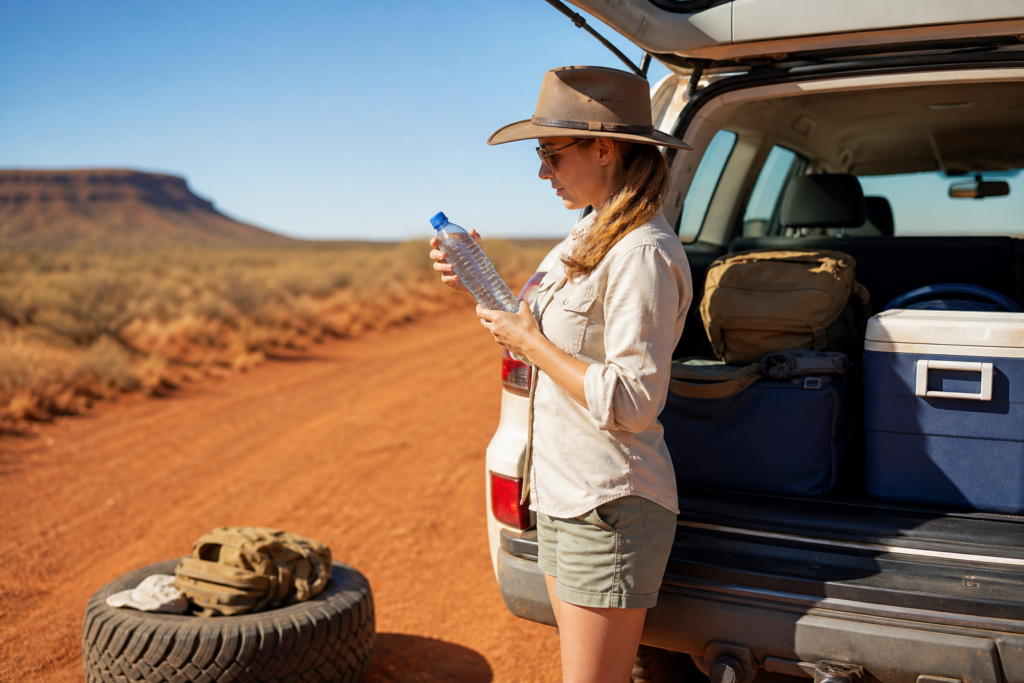
Water is your most critical supply. The minimum in hot conditions is 5 litres of drinking water per person per day, and more if you are travelling in mid-summer or doing any physical activity outside the van. Store a separate emergency reserve somewhere it cannot be lost in a minor crash or a single container failure; dividing storage across two or three containers is sensible. Tap water is generally safe at outback roadhouses and caravan parks, but some in water-scarce areas will not top up van tanks for free, so do not assume you can replenish on arrival.
Food should include non-perishable options that cope with power outages and fridge failures: tinned meals, long-life snacks, nut bars and electrolyte powders. Relying entirely on fridge and freezer space is a gamble when ambient temperatures are pushing those systems hardest.
Sun protection in the outback carries extra urgency. Reflected heat from pale ground and bitumen intensifies UV exposure beyond what most people expect, so wide-brim hats, high-SPF sunscreen reapplied frequently, light long-sleeved clothing, quality sunglasses and proper shade at rest stops are all essential rather than optional.
Your first aid kit needs specific additions for heat: oral rehydration salts, cooling packs or cloths, a snake bite bandage, and extra dressings. If someone develops heat exhaustion, shown by heavy sweating, weakness, clammy skin and nausea, move them immediately to shade, cool them with water and airflow, and give small, steady amounts of fluid. Heatstroke, with symptoms including confusion, very hot dry skin and possible collapse, is a medical emergency requiring aggressive cooling and immediate activation of your emergency device.
Do not rely on a mobile phone as your only means of communication. A personal locator beacon (PLB) or EPIRB is strongly recommended for any remote outback leg; a satellite phone adds the ability to communicate rather than just signal. At least one of these should travel with you if you briefly leave the vehicle. Before departing, write down your full route, expected overnight stops and arrival dates, leave the plan with a reliable contact at home, and agree on a simple check-in routine so that someone notices quickly if you go overdue. Download offline maps before you leave and carry a paper backup; live navigation is unreliable where mobile signal disappears for hours at a time.
Pre-departure checks: keeping your tow vehicle and caravan fit for the heat
Caravan air conditioner maintenance deserves its own place on this checklist, because a failed unit in the outback is not just an inconvenience; it is a genuine health risk. Before departure, clean or replace the air filters, since clogged filters force the unit to work harder and cool less effectively. Inspect seals and insulation around the roof penetration and duct joins so cold air is not being lost before it reaches the living space, and check the shroud and roof mounting for cracks or looseness that could worsen on corrugated roads. Then do a full performance run on mains power at home, on a warm day if possible, and confirm the unit can hold a comfortable temperature under real load. Keeping your caravan air conditioner well maintained means addressing any issues with filters, seals or other components before you leave rather than out on the road. Sourcing parts from a specialist such as RV Parts Express means you can sort any weaknesses at home rather than facing air conditioner failure hundreds of kilometres from the nearest service. You can also explore keeping your caravan air conditioner well maintained.
On-the-road habits that protect you and the van in high temperatures
Cabin temperature management starts before you even move. Park nose-first into the sun where possible so the living area of the caravan stays in relative shade, use reflective sunshades on the windscreen whenever you stop, and close the van’s blinds and insulate roof hatches during the hottest hours so the interior does not become an oven before you are ready to camp.
While driving, run the vehicle air conditioner at a moderate temperature rather than maximum cold; the engine is working hard enough towing in heat without the added load of trying to chill the cabin to extreme levels. Once you are set up and on mains or generator power, pre-cool the caravan during the cooler parts of the day rather than waiting until the interior is already sweltering. Keep doors and windows closed while the unit runs, because an air conditioner cannot keep up with an open van in 40°C heat, and the extra strain shortens its life.
Your fridge works harder as ambient temperature climbs, and its performance becomes marginal when pushed beyond its design range. Allow generous ventilation around the fridge vents, check the door seal, and keep contents organised so the door spends as little time open as possible. A small fridge thermometer tells you quickly if performance is drifting before food safety becomes an issue. On power strategy, prioritise cooling loads, including the air conditioner, fridge and fans, when the sun is on your solar panels or when you are connected to mains, and keep some battery reserve for overnight fans and essential cooling.
Rest stops are not optional. Stop every two hours, get everyone out of the vehicle into shade, stretch and hydrate steadily. Never leave people or animals in a closed caravan or car, even for a brief roadhouse stop; temperatures inside a stationary vehicle climb to dangerous levels within minutes.
Avoid driving at dawn, dusk and night. Kangaroos, emus, livestock and camels, of which there are around one million feral animals in the outback, are most active and hardest to see in low light. High temperatures also reduce concentration significantly over long, featureless stretches, so if you are tired, stop. Pushing through fatigue to reach the next town is one of the most common and preventable mistakes on outback roads.
Watch yourself and your companions for early heat stress: persistent headache, irritability, dizziness, unusually strong thirst or a noticeable absence of sweating. These are signals to act with rest, shade and fluids, not symptoms to push through.
If the heat or your vehicle wins: what to do in a genuine emergency
Breakdowns happen even on well-prepared trips, and the sequence of your response matters. Get safely off the road first, turn on hazard lights, and set out reflective markers or a high-visibility vest to alert passing vehicles. Then, critically, stay with your vehicle. It is vastly easier for rescuers to spot a caravan than a person on foot, and travellers have come to grief in the outback by walking away from their rig believing help was close. It rarely is.
Once you are stopped, shade is the first priority. Deploy an awning or rig a tarp on the side away from traffic, open doors and windows for airflow while managing dust, and get everyone out of direct sun immediately. A static caravan in full sun heats up fast, so create the best conditions you can outside the vehicle rather than sitting inside it.
Switch to conservative but steady water use from the moment you stop. Sipping regularly is more effective than drinking large amounts at intervals, and electrolyte solutions or salty snacks help maintain hydration when supplies are genuinely limited. Prioritise drinking over washing.
Use your PLB or satellite phone once you have assessed the situation. When you call or activate, give your GPS coordinates or a precise location description, the number of people in your party, your route and destination, and the condition of anyone who is unwell. If you have no emergency device, set out high-visibility clothing, reflective material or a mirror where passing vehicles or low-flying aircraft can see it.
For heatstroke, where symptoms include confusion, collapse and hot dry skin, the response is urgent. Move the person to shade immediately, cool them aggressively with whatever water is available and any airflow you can create, call 000 if you have any signal, and activate an emergency beacon if their condition is serious and help is not nearby. Heatstroke deteriorates rapidly and requires proper medical care.
Recognise deteriorating situations before they become emergencies. Repeated minor overheating of the tow vehicle, passengers already struggling with current conditions, or a heatwave forecast adding several degrees to tomorrow’s temperature are all valid reasons to change your plans. Turn back, shorten the leg, add a day at a roadhouse, or find powered shade and sit it out. The entire logic of a well-prepared outback caravan trip is about margin: enough water, a sound vehicle with a working air conditioner, and a realistic plan that keeps you comfortable even when one thing goes wrong.